Key Points
Robotic-assisted Radical Prostatectomy aims to remove the prostate and seminal vesicles, whilst preserving the structures required to maintain urinary continence and erections (nerve-sparing)
Dr Ashrafi uses very small, robotic instruments that allow precise surgery through small “keyhole” incisions in your lower abdomen (tummy)
We use the latest da Vinci Xi Surgical System
The instruments are under the control of the surgeon and the da Vinci robot simply mimics and assists the surgeon's movements
Dr Ashrafi uses a special enhanced recovery after surgery (ERAS) protocol to further improve your pain and recovery after surgery. This protocol was published in the Journal of Robotic Surgery (2021).
What does this procedure involve?
This involves the delicate and precise removal of the whole prostate gland, seminal vesicles and sometimes the draining pelvic lymph glands. It is performed through several small keyhole incisions in your lower abdomen, using robotic tools or instruments. Our aims in men with cancer confined to the prostate gland are: to remove the prostate cancer; to achieve a clear microscopic margin away from the tumour; to drop the PSA level below 0.1 ng/mL; to preserve your continence; and if possible and appropriate, to preserve the erection nerves to your penis.
Robotic surgery uses sophisticated mini-instruments which are totally under the control of the surgeon. The robot mimics and assists the surgeon's movements; it does not do the operation. This technique allows a high degree of surgical accuracy and leads to much faster recovery compared to open surgery including reduced bleeding, improved comfort and reduced hospital stay. I pay particular attention and detail to preserve the muscle fibres and nerves that control continence. If you still leak some urine after a year (3-5%), this can be corrected by another procedure such as an artificial urinary sphincter or a male sling. The erection nerves lie very close to your prostate, forming a cobweb of delicate strands over its surface. If your erections were normal before the procedure, it is usually possible to preserve them (called nerve-sparing prostatectomy). Even with nerve-sparing, the erections will take time to recover. It is important to start penile rehabilitation after the surgery to maximise recovery of optimal erection function which can take 2-3 years. Our team will explain how you can enjoy a healthy sex life after surgery, even if the nerves do not recover or need to be removed.
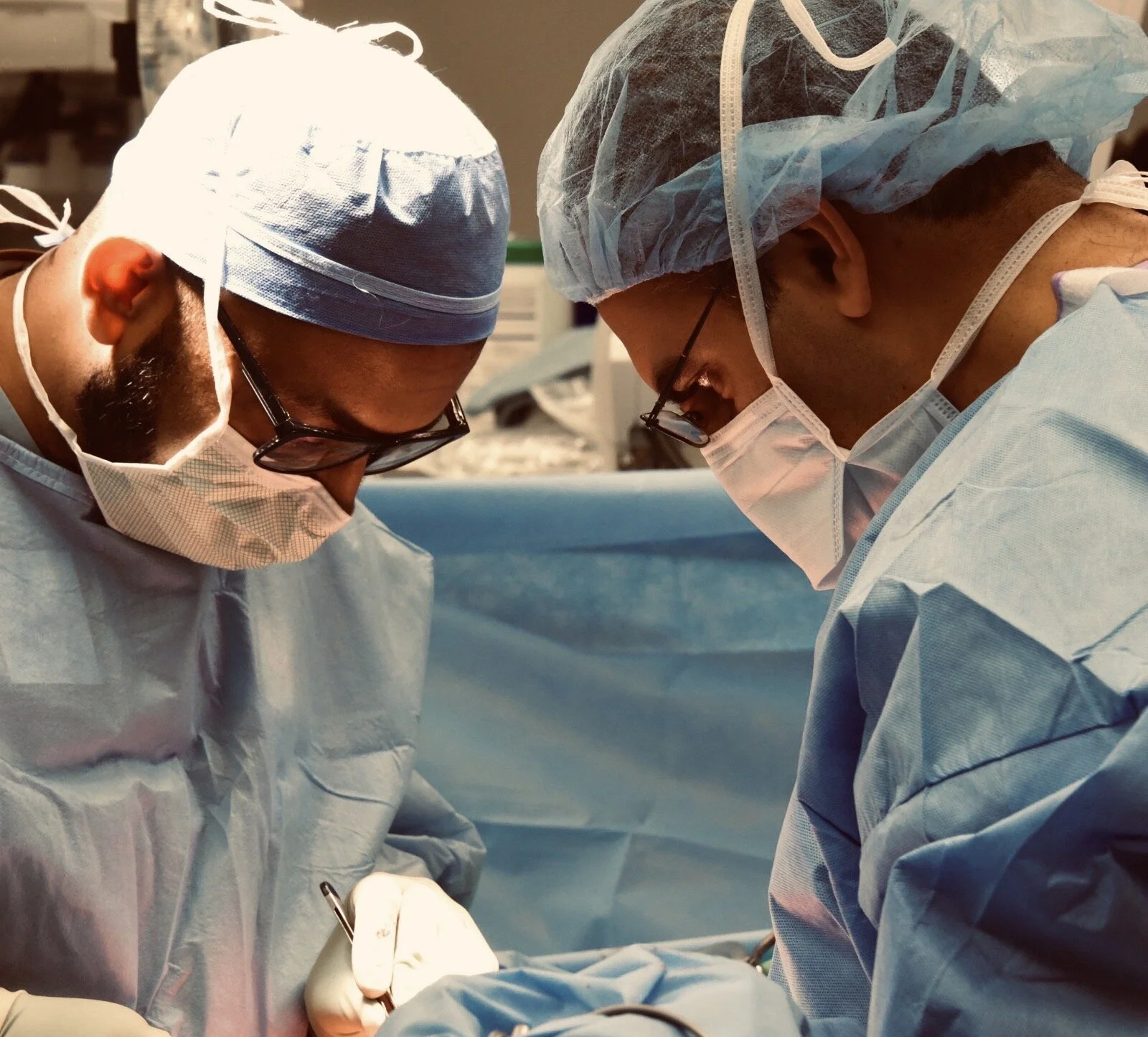
Dr Ashrafi (right) operating.
What are the alternatives for organ-confined cancer?
Active surveillance – careful monitoring of your prostate cancer through periodic PSA checks, rectal exams, MRI scans and prostate biopsies. Active intervention will only be performed if there is definite evidence of cancer progression.
Open radical retropubic prostatectomy - performed through an incision in your lower abdomen (tummy). This technique is associated with reduced vision and precision, and increased blood loss, pain, and risk of complications compared to robotic surgery.
External beam radiotherapy – getting a daily dose of external X-rays to your prostate gland for six weeks. Radiotherapy is associated with longer-term risks including injury and bleeding from the bladder, injury and bleeding from the rectum and developing secondary cancer (5%) from the radiation.
Permanent seed brachytherapy – implanting radio-active seeds under ultrasound control into the prostate gland. This technique is not recommended for higher-risk prostate cancer.
Deciding which treatment to have is not something you will do alone and may depend on the level of expertise available. If you need further information, please contact our team.
What happens on the day of the procedure?
Dr Ashrafi will briefly review your history and medications and will discuss the surgery again with you to confirm your consent. An anaesthetist will see you to discuss the general anaesthetic and pain relief after the procedure. We may provide you with a pair of TED stockings to wear, and we may give you a heparin injection to thin your blood. These help to prevent blood clots from developing and passing into your lungs.
Details of the Procedure
This procedure involves removing your prostate gland along with the seminal vesicles, which are two small glands near the prostate gland.
We normally perform the procedure under a general anaesthetic
We will give you an injection of antibiotics before the procedure, after carefully checking for any allergies
Robotic surgery is done using a scope and hollow tube(s) called ports. A scope is a thin, lighted instrument with a camera attached.
We make five or six keyhole incisions (cuts) in your abdomen that allow the ports to be placed. The surgeon can pass tools (robotic instruments) through the ports.
We use local anaesthetic to numb the keyhole incisions and minimise your discomfort when you wake up
The robotic instruments allow Dr Ashrafi to free your prostate from the bladder and urethra (waterpipe) so it can be removed, whilst sparing the muscles and nerves that control continence and trying to preserve your erection nerves
The robot does not perform any part of the procedure by itself. It is always under the direct control of the surgeon. Carbon dioxide gas is pumped into the abdomen. This helps Dr Ashrafi see inside the abdomen. It also gives more room to work. Your surgeon may not be able to complete the procedure using a scope or robotics. If the surgery is not done with a scope or robot, it may be done through a larger incision.
During your recovery, it will drain urine from the bladder into a bag. It is placed through the urethra, the channel for urine (inside the penis in males).
We then re-join your urethra to your bladder using absorbable stitches.
The pelvic lymph nodes in the region may also be removed (depending on cancer risk).
We will place a drain (tube) in the surgery site to remove excess fluid from the abdomen.
We put a catheter (long thin tube) in your bladder to drain the urine while the new join between the bladder and urethra heals
All the keyhole incisions are closed with absorbable stitches
The procedure usually takes two to three hours to perform
After the procedure, you often get some bruising and swelling around the keyhole incisions together with some swelling or puffiness in your scrotum.
You may also get some facial puffiness for a day or two (because you lie slightly “head down” during the surgery).
You may feel some shoulder pain and bloating until your bowel starts working again (normally after 24 hours).
Most patients can go home after a day or two.
Delayed or longer-term after-effects
No semen is produced during orgasm, which effectively means unable to have children (all patients)
Erectile dysfunction, even with a nerve-sparing approach (most). We will commence a penile rehabilitation program after the catheter is removed. Erectile function recovery is better in: younger men, men with good pre-operative sexual function and erections, men that are not obese.
Shortening of your penis (most)
Temporary urinary incontinence (inability to hold urine) requiring pads (most). Recovery of continence (defined as 1 safety pad or less) is better in: younger men, men with good pre-operative urinary function, men that are not obese.
Persistent and severe urinary incontinence lasting more than a year and requiring corrective surgery (3-5%)
Pathology test showing adverse features (depends on cancer risk): Cancer outside the prostate capsule, Cancer at the resecton margin (microscopic), Cancer going into the seminal vesicle, Cancer going into the pelvic lymph nodes.
Need for “multimodal treatment” in the future (10-50% depending on cancer risk). Further treatment may include hormones, radiotherapy or chemotherapy at a later date if your PSA blood test still shows that cancer is present or may have recurred.
What can I expect when I get home?
You will get some swelling and bruising of the incisions which may last several days
It may be several days before you have your bowels open and this is normal. Dr Ashrafi will prescribe your bowel medications to keep your bowel movements soft and regular.
You will be discharged with a catheter in your bladder; the experienced nursing staff will show you how to manage it at home
You will usually be given a script for the following medications: non-opiate pain killers, medications to help bowel activity, antibiotics for a few days
Any medication you may need will be arranged and dispensed from the hospital pharmacy
A follow-up appointment will be made at the hospital in 1-2 weeks for a “cystogram” to ensure the join between the bladder and urethra is fully healed. If the join is healed, the catheter will be removed.
Once your catheter has been removed, you should start doing pelvic floor exercises
do not worry if you leak some urine when your catheter comes out; almost everyone has a period of bladder recovery when they will need to wear protective pads
you should make an appointment to see a specialist pelvic floor physiotherapist
You will have a follow-up appointment for postoperative review at 3-4 weeks
We will arrange for you to have your first PSA check 10 to 12 weeks after the procedure