
(08) 8119 0961
Fax 08 8164 5397
Healthlink EDI: adurolog
Home / Conditions / Blood in the urine
Condition · General urology

Blood in the urine

Seeing blood in your urine (haematuria) can be alarming. While the cause is harmless in many instances, blood in urine may indicate a serious underlying condition.

About blood in the urine

Seeing blood in your urine (haematuria) can be alarming. While the cause is harmless in many instances, blood in urine may indicate a serious underling condition. Blood that is visible to the eye is called gross or macroscopic haematuria. Blood that is not visible to the eye and is only identified when your doctor tests your urine is called microscopic haematuria. Blood in the urine is not normal and it is important to rule out a serious underlying cause. Treatment depends on the underlying cause.
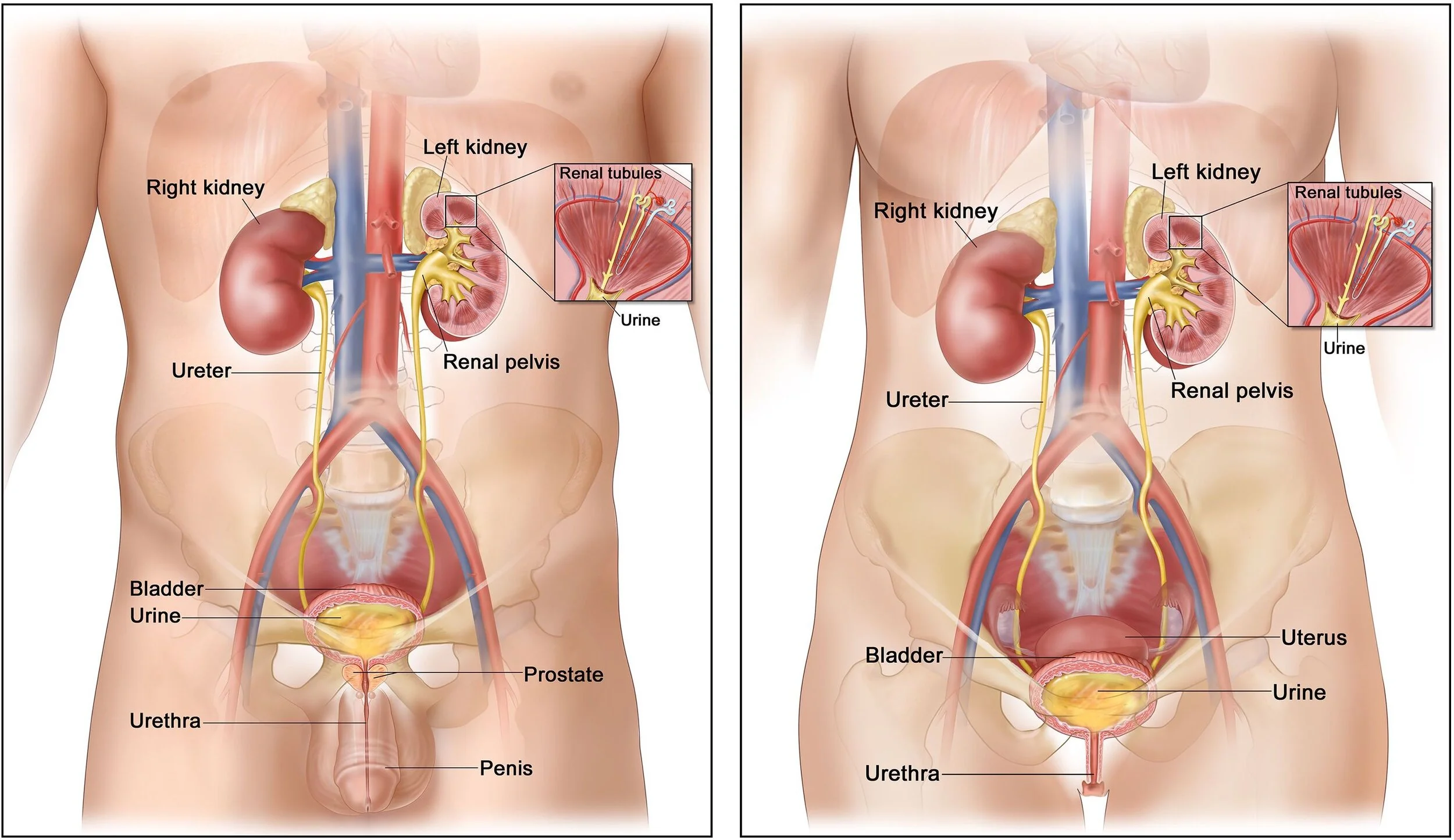
The male and female urinary tract.

Symptoms

Pink, red or cola-colored urine due to the presence of red blood cells in the urine (gross or macroscopic haematuria). It takes very little blood to make the urine red. It is reassuring to know that most of the urine is still normal urine.
Blood clots in the urine.
Blood in the urine is usually painless.
Pain may occur if there are blood clots or an associated infection.

Causes

Blood in the urine can come from anywhere in the urinary tract, from your kidneys to the urethra. There are several causes including:

Urinary tract infections.
Kidney or bladder stones.
Enlarged prostate gland.
Kidney disease.
Cancer. Haematuria can be a sign of kidney, bladder, prostate or urethral cancer.
Kidney trauma or injury. A blow to the kidneys from a road traffic accident or contact sports can cause visible blood in the urine.

Tests

Urine tests
Another urine test helps to confirm there are still red blood cells in the urine. A urine test can also test for urinatry tract infections.
Urine cytology
A special urine test can be do done to check for cancer cells in the urine.
Imaging tests
An ultrasound, CT or MRI imaging test is often recommended to look for any of the common causes of haematuria.
Cystoscopy
We use a tiny telescope with a camera on the the tip to enter the bladder. This technique allows us to examine the bladder and urethra under direct vision.

Treatment

Treatment depends on the underlying condition. In some cases, no treatment is necessary. Depending on the cause, treatment may include:

Antibiotics to treat a urinary tract infection
Medication to shrink an enlarged prostate
Laser treatment of bladder or kidney stones
Transurethral resection of bladder tumour (TURBT) if a bladder mass is present
Minimally invasive surgery for cancer including robotic surgery
Be sure to follow up with after treatment to check that there is no more blood in your urine.

Speak with our team

Have a referral or a question about your care? Our team is here to help.

Call (08) 8119 0961
REQUEST A CONSULTATION

Speak with A/Prof Akbar Ashrafi

Consultations are available across our Adelaide locations. Bring your referral and any recent scans or test results, and we will talk through your diagnosis, the options available to you, and what to expect.

Referrals accepted from GPs and specialists.